
Erosion Control & Landscaping in Charlotte, NC
Local Landscape Design Expertise
In Myers Park and across Charlotte, NC, sloped yards and clay-heavy soil demand expert landscape design paired with reliable erosion control service. Our soil preparation and stabilization work protects your investment while creating beautiful, functional outdoor spaces that handle our region's intense summer storms.
How We Work
From site assessment to final vegetation establishment, we follow proven methods tailored to Charlotte's Piedmont terrain and clay soil conditions.
What's Involved
Site & Soil Assessment
We test soil pH, drainage patterns, and compaction levels. Clay-heavy Charlotte soils need targeted amendments to support healthy plant roots and water penetration.
Grading & Preparation
Slopes steeper than 30 percent need proper terracing or retaining walls. We grade terrain to direct water away from structures and improve surface stability.
Hydroseeding or Sod
Hydroseeding applies seed, mulch, and tackifier in one slurry. Sod installation provides instant coverage. Both stabilize soil and prevent erosion from heavy rains.
Erosion Control Measures
For severe slopes, we install erosion blankets, straw mulch, or riprap to hold soil during the establishment phase. These protect against gullies and runoff damage.
Ongoing Monitoring
We check vegetation establishment and drainage. Winter freeze-thaw cycles in Charlotte can stress slopes, so adjustments may be needed to ensure stability.
Long-Term Care
Root systems establish strength over months. Proper watering and mulch management prevent weeds and maintain soil cohesion through summer storms.
You'll always know what's happening next—and when.
Our Services
We deliver landscape stabilization services customized to Ballantyne's rolling terrain, South End's urban lots, and Myers Park's mature estates.
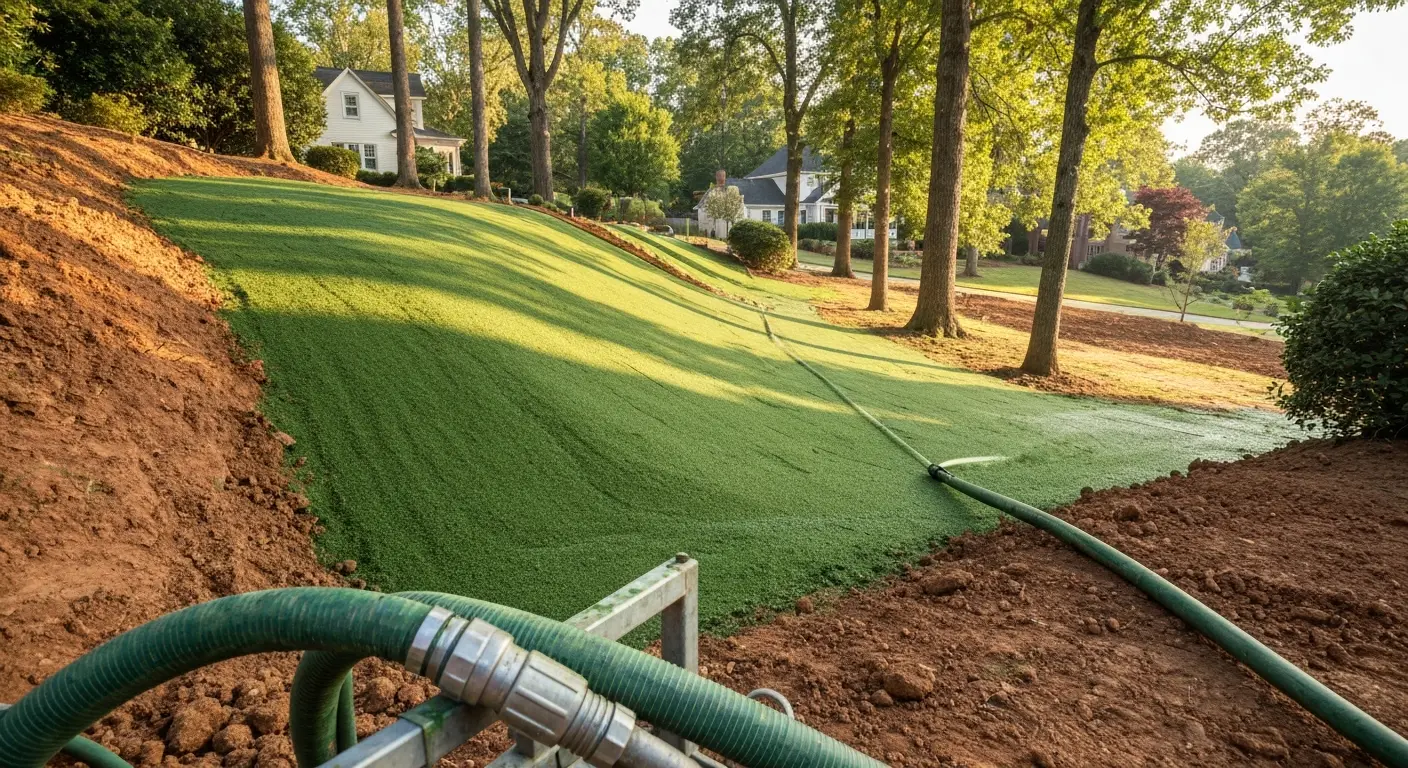
Hydroseeding on a sloped yard near Freedom Park in Myers Park stabilizes soil and prevents water runoff damage.
Hydroseeding
A slurry of seed, mulch, fertilizer, and tackifier sprayed onto bare or eroded soil. Ideal for steep terrain and construction sites, hydroseeding germinates quickly even in Charlotte's clay soils when pH is balanced.
- Covers large areas faster than sod
- Reduces dust pollution and weed seeds
- Root systems anchor soil against runoff
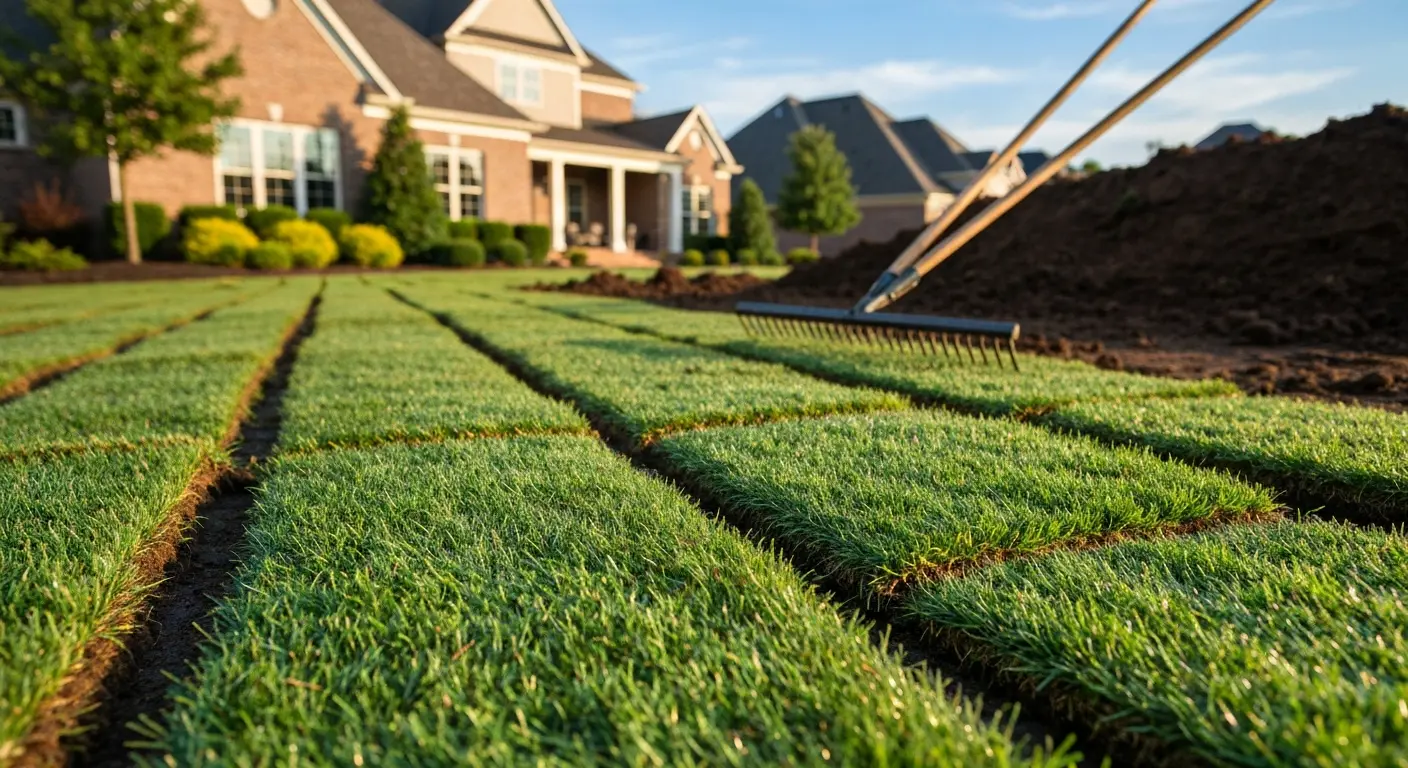
Fresh sod installation in Ballantyne provides instant green coverage for newly graded yards.
Sod Installation
Pre-grown turf laid directly onto prepared soil. Sod works well for flat or gently sloped areas and creates an instant lawn that resists erosion the moment it's in place.
- Immediate green coverage for events or sales
- No germination wait; prevents early erosion
- Works on compacted construction sites
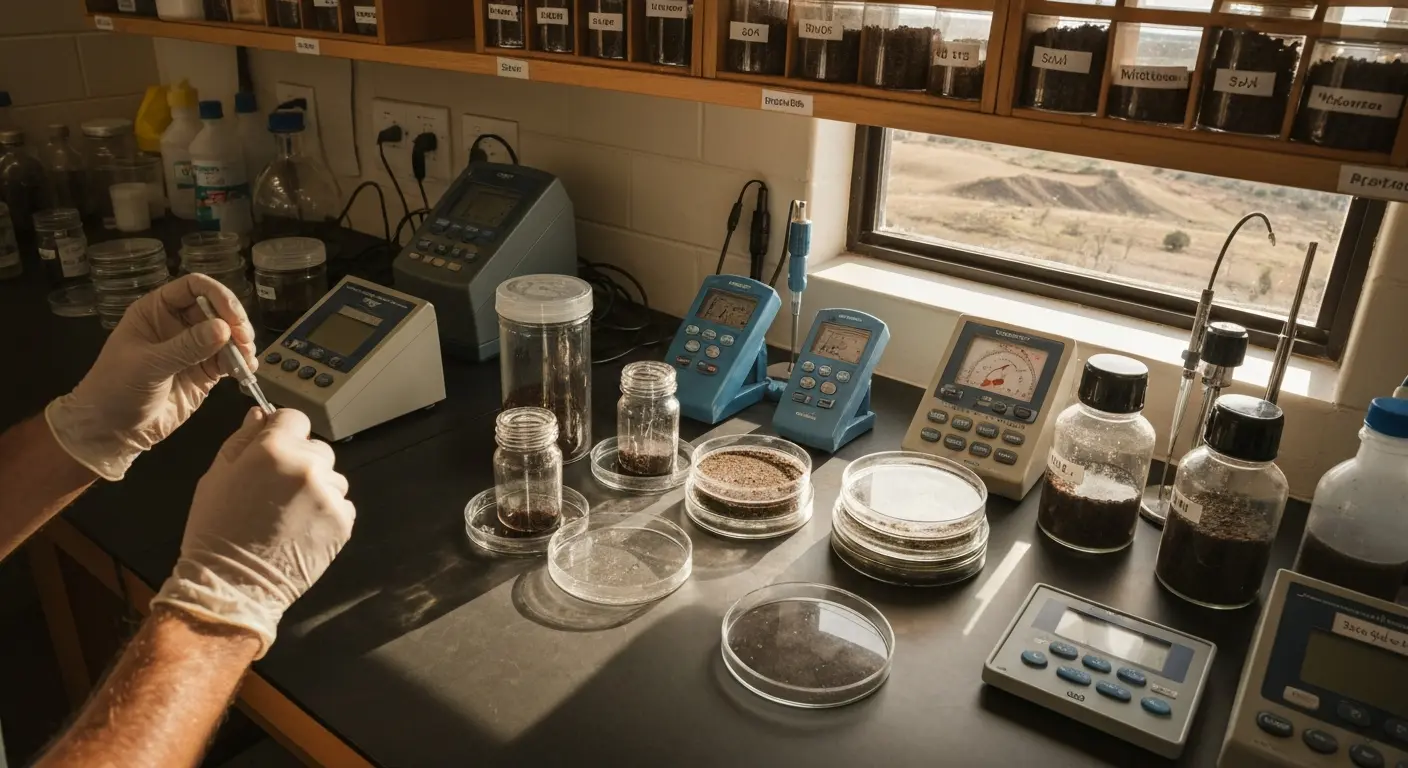
Lab soil testing ensures proper pH and nutrient balance before hydroseeding or planting.
Soil Testing & Amendments
Charlotte's Piedmont clay requires targeted amendments. We test for pH, toxicity, and compaction, then add lime, fertilizer, and organic matter to improve drainage and root penetration.
- Lab analysis guides seed selection
- Lime and compost improve clay structure
- Prevents germination failures and bare patches
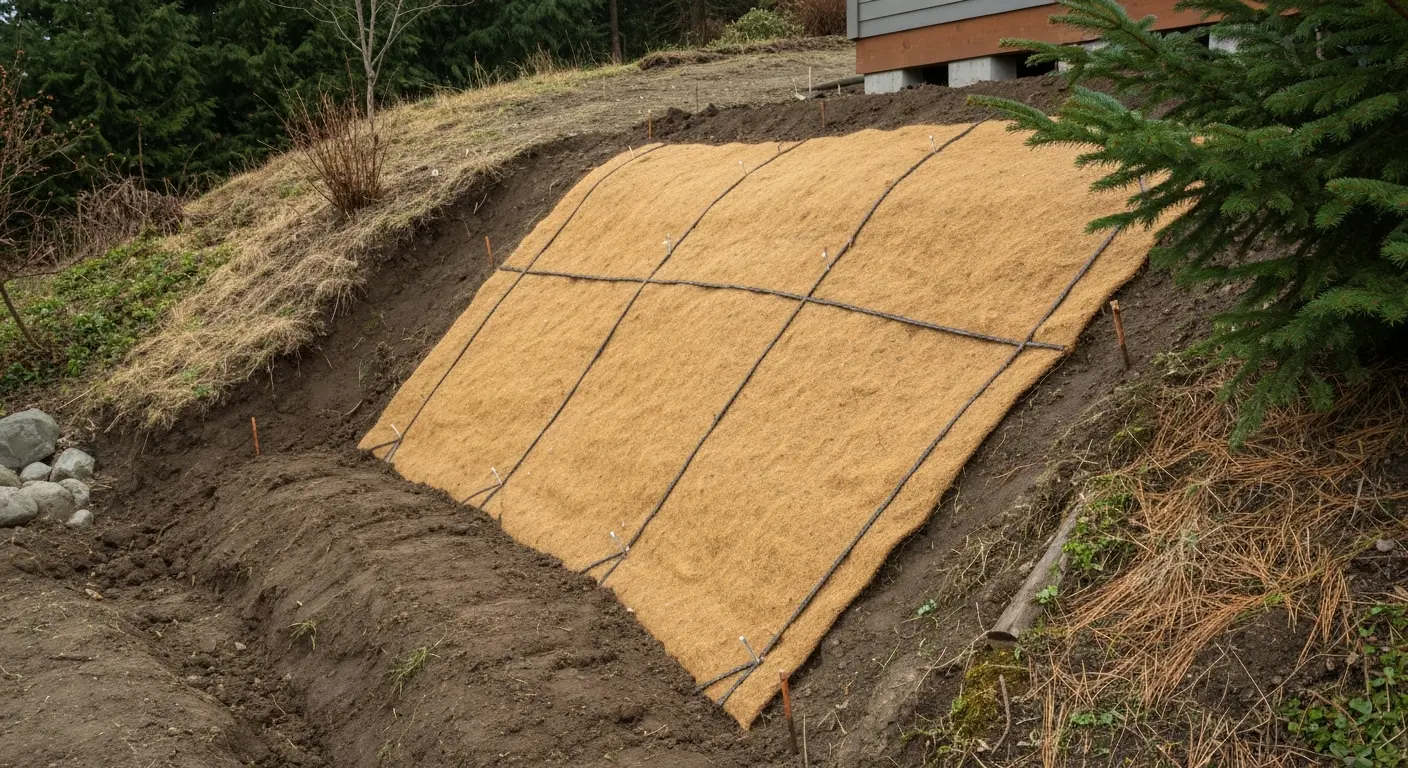
Erosion control blankets on steep slopes near South End protect exposed soil from summer storms.
Erosion Control Blankets & Mulch
Biodegradable mats and straw blankets hold soil in place while grass roots establish. Essential for slopes steeper than 2:1 grade where water runoff poses high risk.
- Straw mulch applied immediately after grading
- Protects against gullies and sheet erosion
- Biodegradable—breaks down as grass grows
Protect your landscape from erosion. Call us to assess your site and start stabilization work.
Why Local Expertise Matters
Charlotte's topography, soil type, and weather create unique challenges that demand regional knowledge.
Sloped Terrain in Every Neighborhood
From gentle hills in Myers Park to dramatic elevation changes in Ballantyne and Waxhaw, our region's natural slopes funnel water downhill. Improper grading causes foundation damage, landscape erosion, and runoff into storm drains.
We assess grade and drainage patterns to recommend terracing, retaining walls, or strategic planting. Gentle slopes respond well to deep-rooted plants; steep slopes need structural support.
Clay-Heavy Soil & pH Testing
Charlotte's Piedmont soils are predominantly clay. Clay compacts easily, drains poorly, and resists seed germination if pH is off. Standard hydroseeding fails without soil testing and amendment.
We test every site for pH and toxicity. Organic matter like compost and aged leaf mold improves structure. Lime adjusts pH for seed success. This pre-work prevents wasted seed and bare patches.
Heavy Rain & Freeze-Thaw Stress
Summer thunderstorms drop intense rainfall that washes away loose soil. Winter freeze-thaw cycles expand water in soil, destabilizing root systems and breaking apart hardscape.
Proper erosion control—including drainage grading, stabilizing blankets, and vegetation—prevents foundation damage and protects water quality in our local streams and watersheds.
Native Plants & Seasonal Timing
Native grasses, azaleas, ferns, and ornamental species thrive in our climate and establish strong root systems that hold soil. Spring and fall offer ideal conditions for seed germination—cool, wet weather with no harsh summer heat.
We time hydroseeding and sod installation to avoid winter dormancy and summer stress, ensuring faster establishment and better survival rates.
Who Benefits From Erosion Control
Residential, commercial, and construction projects across Charlotte rely on landscape stabilization.
- Residential homeowners: After new construction, grading work, or storm damage, homes need erosion repair to restore yards and prevent foundation problems.
- Builders & developers: New subdivisions in Ballantyne, Waxhaw, and nearby areas require site stabilization to meet local environmental regulations and prevent sediment runoff.
- Commercial properties: Retail centers, parking lots, and industrial sites need proper grading and drainage to avoid liability and stormwater compliance fines.
- Stream & slope restoration: Properties near creeks or hillsides benefit from riprap, vegetation, and bank stabilization to prevent further erosion.
Landscape Designer & Erosion Control Service in Charlotte
We serve Myers Park, Ballantyne, South End, Dilworth, Eastover, SouthPark, and surrounding Charlotte neighborhoods.
Whether your yard faces spring runoff, slopes need reinforcement, or bare patches demand coverage, we assess conditions and build a stabilization plan suited to your property.
Getting Started
Contact us for a free site evaluation. We'll review your terrain, soil, and drainage, then recommend hydroseeding, sod, erosion blankets, or grading work. Our team coordinates with local utility marking services to protect buried lines before any earthwork begins.
Frequently Asked Questions
What causes erosion on Charlotte properties?
Summer thunderstorms, winter freeze-thaw cycles, clay soil compaction, and slopes steeper than 30 percent all drive erosion. Gullies, bare patches, and sediment in gutters signal soil loss.
Is hydroseeding or sod better for my yard?
Hydroseeding costs less and works on steep terrain and large areas. Sod provides instant green coverage on flat sites. We recommend sod for events or immediate curb appeal, hydroseeding for slopes and budget-conscious projects.
Do I need a permit for erosion control work in Charlotte?
Most grading and land disturbance over one acre requires an erosion control permit. Work near streams or wetlands may need additional approvals. We coordinate permitting to ensure compliance.
How long does it take for hydroseeded grass to fill in?
Seed typically germinates within 7–14 days under favorable moisture and temperature. Dense, usable turf establishes over 6–8 weeks. Spring and fall offer optimal growing conditions.
What if my yard has compacted construction soil?
Compacted soil blocks water penetration and seed germination. We test for compaction, then loosen the surface and add organic amendments before hydroseeding or sod installation.
Can you prevent erosion near my foundation or driveway?
Yes. Proper grading, drainage trenches, and vegetation establish a stable buffer zone. Retaining walls or terracing redirect water away from structures and prevent undermining.
DISCOVER WHAT OUR CUSTOMERS HAVE TO SAY ABOUT US
REVIEWS
proudly serving these areas
Charlotte, NC
Rock Hill, SC
Winston Salem, NC
Sanford, NC
Pinehurst, NC
Greensboro, NC
READY TO take the next step?
get a free quote TODAY!

QUICK LINKS
our services
service areas
operating HOURS
Mon: 8:00 am - 5:00 pm
Tue: 8:00 am - 5:00 pm
Wed: 8:00 am - 5:00 pm
Thu: 8:00 am - 5:00 pm
Fri: 8:00 am - 5:00 pm
Sat: Closed - Closed
Sun: Closed - Closed